
Core Design Team
Firm: DLR Group
Lori Coppenrath
Erica Loynd
Lisa Lazar
Shannon Payton
Julianna Burke
William Ragland
Sean Avery
Poornima Raghu
Abby Baker
Jose Jordan
Consultants/Collaborators
Owner Representative: Washington State Department of Enterprise Services
Civil Engineering: KPFF Consulting Engineers
Envelope Consultant: RDH Building Science
Structural Engineer: DLR Group
Electrical Engineer: DLR Group
Mechanical Engineer: DLR Group
Acoustical Consultant: DLR Group
Landscape Architecture: HBB Landscape Architecture
Experiential Graphics: DLR Group
Project Narrative
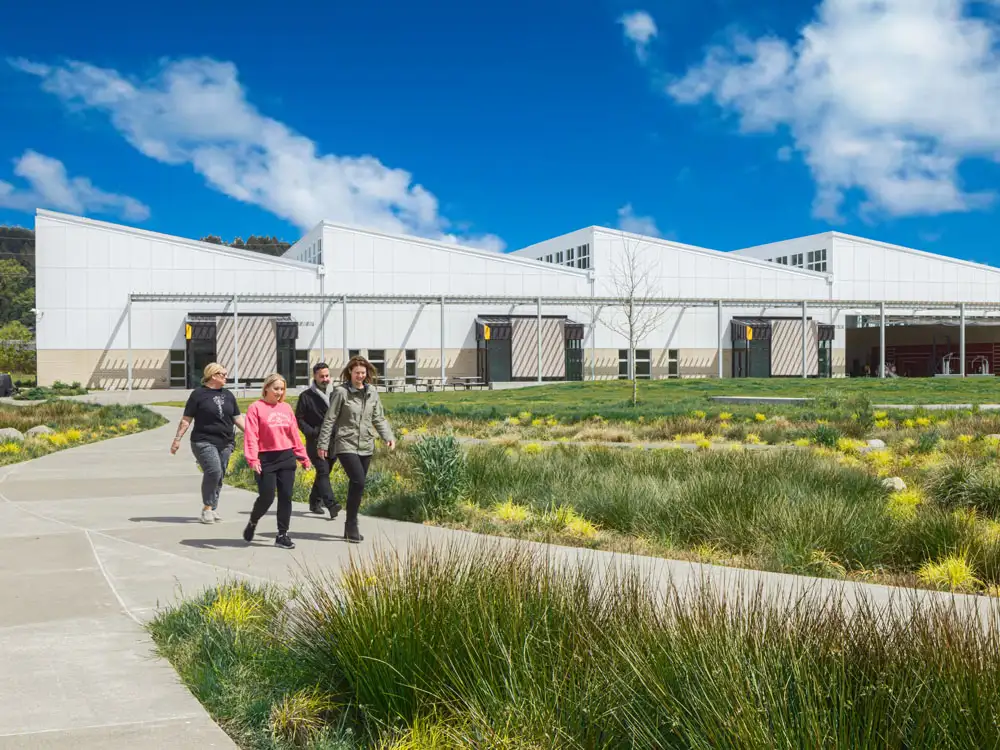
The new Green Hill School Wellness & Recreation Center, located on a medium-maximum security residential treatment campus for male youth ages 13–25, significantly enhances daily experiences for all users. This project replaces an outdated gym with a holistic center that supports health in all its facets: social and emotional wellbeing, therapeutic treatment, physical fitness, nutrition, and gardening programs.
To ensure youth feel comfortable and safe, the design incorporates materials and elements typically found in public recreation and educational facilities, deliberately avoiding the anxiety-inducing atmosphere common in institutional settings. This approach allows youth to focus more fully on their wellbeing and to become engaged members of their community. Recognizing the health risks faced by staff—highlighted by a study from the Oregon Department of Corrections and Portland State University that found corrections officers have an average lifespan of only 58 years due to conditions like obesity and hypertension—the project also provides a suite of respite, social, collaborative, and outdoor spaces designed to attract, retain, and restore staff. These supportive spaces are crucial to enabling staff to deliver the best outcomes for youth.
In collaboration with the stakeholder group, the design team also engaged directly with youth on campus to understand what activities and environments they would find enjoyable and engaging. Given the broad age range of 13–25 years, spaces needed to be flexible to accommodate equipment and games that support varying developmental needs. At this phase of the project, a pool was part of the program, and youth enthusiastically described games and events that would encourage them to leave the weight room—the most requested space—and use the aquatic facilities. They imagined features like a lazy river splash park, and shared favorite activities such as belly flop contests and team-based pool games. These conversations ensured that the benefits of recreation and exercise would be widely shared, advancing the project’s goals of health, wellness, and mental rehabilitation.
The Wellness & Recreation Center is the first Net Zero Energy facility and the first LEED Gold Certified building for Washington State’s Department of Children, Youth, and Families (DCYF), with a targeted Energy Use Intensity (EUI) of 13. Designing and operating this high-performance building within a corrections environment required thorough staff engagement to build trust with new technologies and ensure the facility remained safe and durable.
Throughout the project, close collaboration with users and the client shaped the design intentions. Deep engagement helped identify core needs such as trauma-sensitive spaces with attention to acoustics, human scale, transparency, and air quality. Challenges around creating a welcoming, flexible environment that supports self-efficacy and celebration were addressed through iterative design processes and user feedback sessions. The result is a facility that balances security requirements with a therapeutic and restorative atmosphere for youth and staff alike
Green Hill School Wellness & Recreation Center, Chehalis, WA
Citation Award
2025 AIA/WA Civic Design Awards
Client: Department of Children, Youth & Families (DCYF)
Firm: DLR Group
Photos: Ed Sozinho
Gallery


- DLR Group