
Core Design Team
Firm: ALSC Architects
Rustin Hall
Iren Taran
Todd Keller
David Elms
Jeff Lane
Esteban Barrientos
Consultants/Collaborators
Design Architect, Interior Design: HGA
Structural Engineer, Mechanical Engineer, Electrical Engineer, Fire Protection Designer: Coffman Engineers
Civil Engineer: Parametrix
Landscape: Land Expressions
Cost Estimating: Thomas Consulting
Survey: AHBL
Geotech: Strata
LEED: Design Balance
Acoustical: Stantec
Historic Preservation: GPA
WA NREC Review: Energy Control, INC
Project Narrative
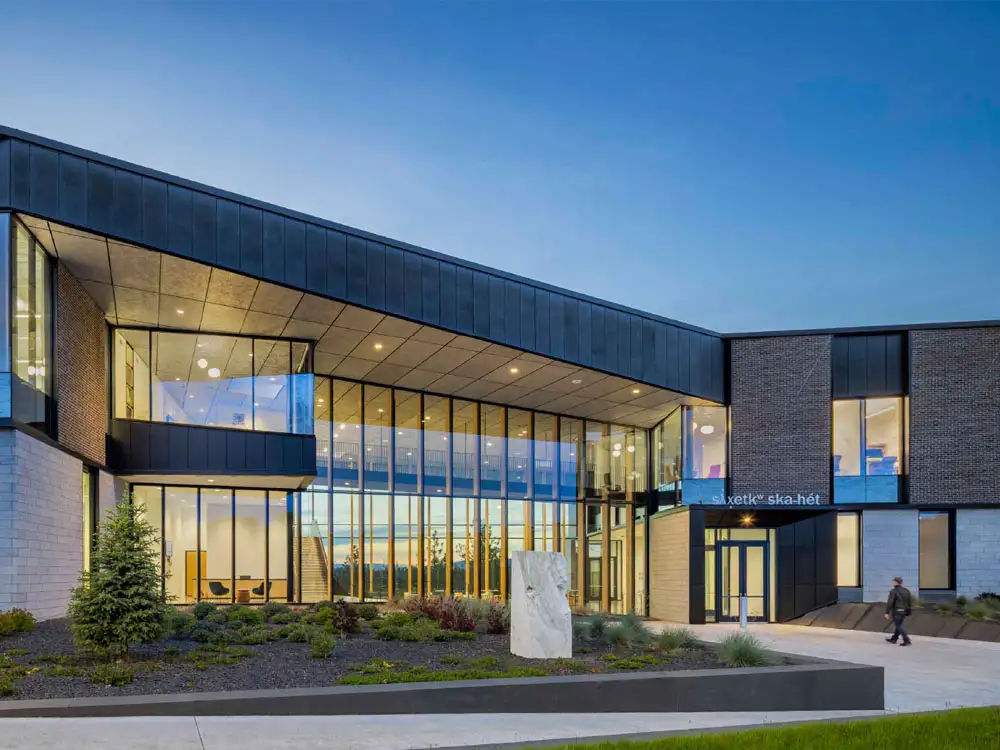
The new Fine Arts Center at Spokane Falls Community College consolidates the campus’s diverse and vibrant art programs within a singular, purpose-built facility, transforming the physical and cultural landscape of the college. Situated at the edge of a dramatic bluff overlooking the Spokane River and Riverside State Park, the building not only anchors the eastern edge of campus but also celebrates its unique regional context and the dynamic creativity of its community.
Project Intentions and Program Requirements
Before the completion of this project, art programs at the college were scattered across various retrofitted buildings and peripheral spaces, limiting opportunities for collaboration, innovation, and visibility, both within the academic environment and to the broader community. The new facility is designed to unite programs in painting, sculpture, printmaking, ceramics, photography, and digital media, while also providing professional-quality dedicated gallery space to support learning through the exhibition of student, faculty, and visiting artist work.
Program requirements included a range of specialized studio spaces, general-purpose classrooms, flexible critique and lecture spaces, next-generation photography and digital labs, as well as communal gathering areas. High-performance infrastructure and tailored building systems support needs for ventilation, equipment, and studio safety, while gallery and exhibition spaces were designed for public engagement at both campus and regional levels.
Building Inspiration and Experience
At its heart, the Fine Arts Center is conceived as both a showcase and a catalyst for art—the building broadcasts creative energy outward, not just displaying finished works, but intentionally drawing process, experimentation, and learning into the public realm. The design places the act of making on display, blurring boundaries between galleries and studios and fostering an environment where learning truly happens everywhere. Common spaces open onto corridors lined with works-in-progress, and visual connections allow glimpses into each discipline’s domain, encouraging cross-pollination and sustained curiosity.
A double-height campus lobby forms a vibrant living room, with generous glazing that frames views of the natural landscape and serves as a beacon to the greater campus. Embracing the dual scales of community and individual, the building offers both campus-scale moments—such as this welcoming aperture for events and exhibitions—and intimate perches and nooks where artists and visitors can retreat for reflection or inspiration, each space carefully attuned to the artist’s journey.
Beyond elevating the arts for current users, the facility has become a powerful recruitment and retention tool, drawing new students, staff, and traveling artists to the college and providing the Spokane region with cultural experiences and exhibitions that were previously unavailable.
Building Integration and Community Engagement
The Center’s architecture responds keenly to its setting. The building stretches to the edge of the bluff, visually and physically engaging the expansive river valley and state park beyond. Large, campus-facing windows embrace the arts and invite the entire college community to participate, while west-facing glazing draws in sunlight and frames seasonal views that inspire students and faculty alike.
Landscaping draws from the surrounding ecosystem, with native plantings softening pathways and echoing the meanders of the Spokane River below. The approach to the building is shaped by “landscape fissures”—pathways and planted corridors that funnel and adjust visitors’ perspectives, setting the tone for a transition from campus life to immersive engagement with the arts.
Inside, transparency and programmatic adjacency foster exploration across disciplines. The organization of spaces encourages accidental encounters—students move from open galleries into specialized studios, visitors pass by works in progress, and a sense of shared ownership and connection pervades all levels.
Environmental Sensitivity
As the first campus building to extend visibly into the natural bluff, the facility demonstrates a commitment to environmental sensitivity and stewardship. Building orientation maximizes natural daylight and expansive views, reducing reliance on artificial lighting during the day and strengthening occupants’ connection to place. The building’s material palette references the region’s geology and timber heritage, integrating wood, brick, and glass in a manner that is both modern and enduring.
Native and adapted planting schemes require minimal irrigation and provide habitats for local fauna, contributing to the campus’s sustainability goals. The careful siting of the building and the integration of landscape features create a sense of harmony between the built and natural environments, affirming the deep ties between art, learning, and the local ecosystem.
Social Impact and Broader Access
By uniting the arts under one roof, the Center catalyzes innovation and collaboration—faculty and students now benefit from greatly expanded opportunities for shared coursework, critique, and exhibition. The transparency of the program draws in non-arts students and creates a sense of belonging and possibility for all. The Center’s public galleries regularly host professional and traveling artists, bringing a higher level of cultural engagement to the community and providing Spokane with access to work and thinkers of national significance.
Accessible design principles ensure every space—classroom, gallery, lounge, and pathway—is welcoming to all users, supporting walkability, engagement, and alternative transportation access to and from the neighboring community.
Client Satisfaction and Shared Goals
Throughout the project, close coordination with college leadership, faculty, and facilities staff ensured that the building met current needs while providing flexibility for future growth and unknown opportunities. Programming sessions, student workshops, and regular design reviews yielded spaces that reflect shared values: openness, accessibility, and a commitment to supporting the entire journey of the artist—from initial discovery through professional practice.
The resulting Fine Arts Center is more than the sum of its parts: it is at once a vessel for learning, a catalyst for cultural exchange, and a regional beacon for creativity. Through innovative architecture, environmental sensitivity, and highly collaborative process, the building sets a new standard for civic arts education and community connectivity in Washington State.
Fine & Applied Arts Building, Spokane, WA
Citation Award
2025 AIA/WA Civic Design Awards
Client: Spokane Colleges
Firm: ALSC Architects
Photos: Patrick Martinez
Gallery


- ALSC Architects PS